How to Measure Roof Pitch
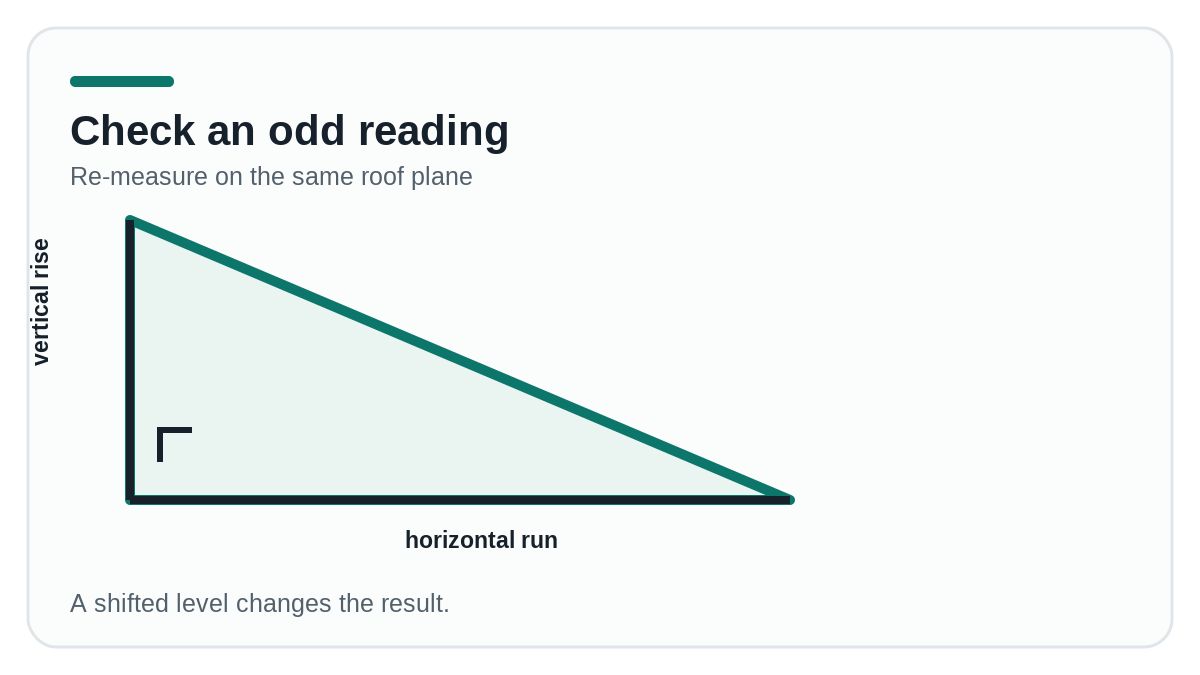
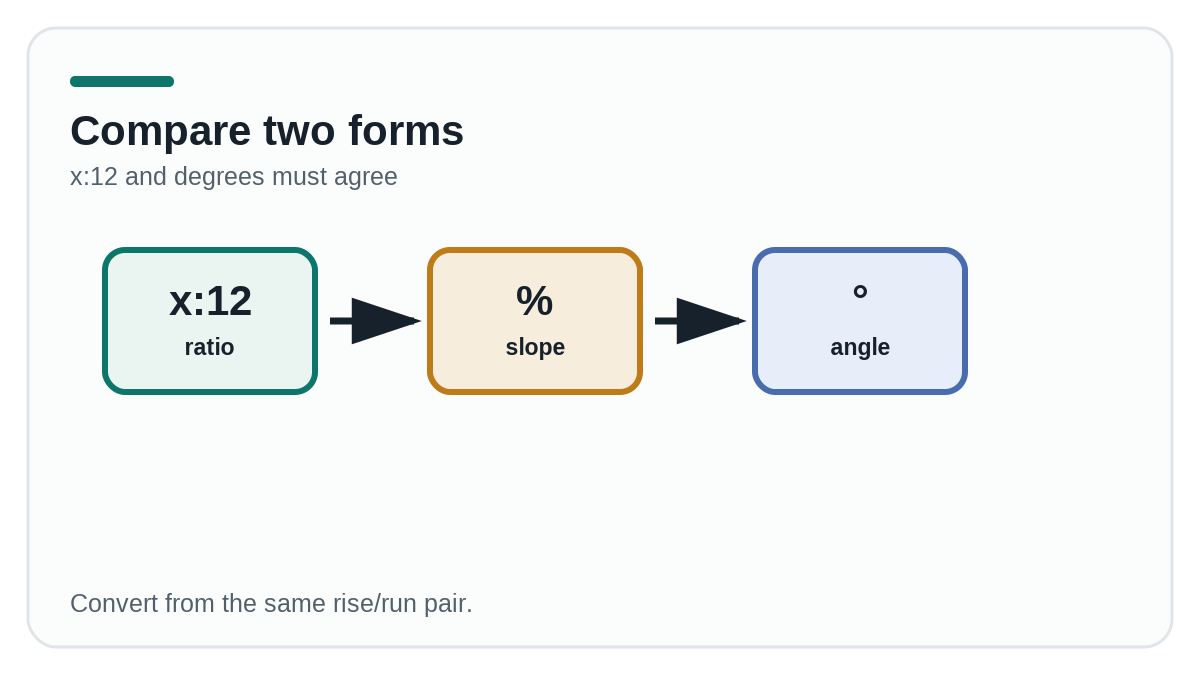
Measure one roof plane as vertical rise over a level 12-inch horizontal run. If an instrument gives an angle instead, convert it back to X:12 with 12 × tan(angle), then record that rise before rounding.
Make one repeatable roof-plane record
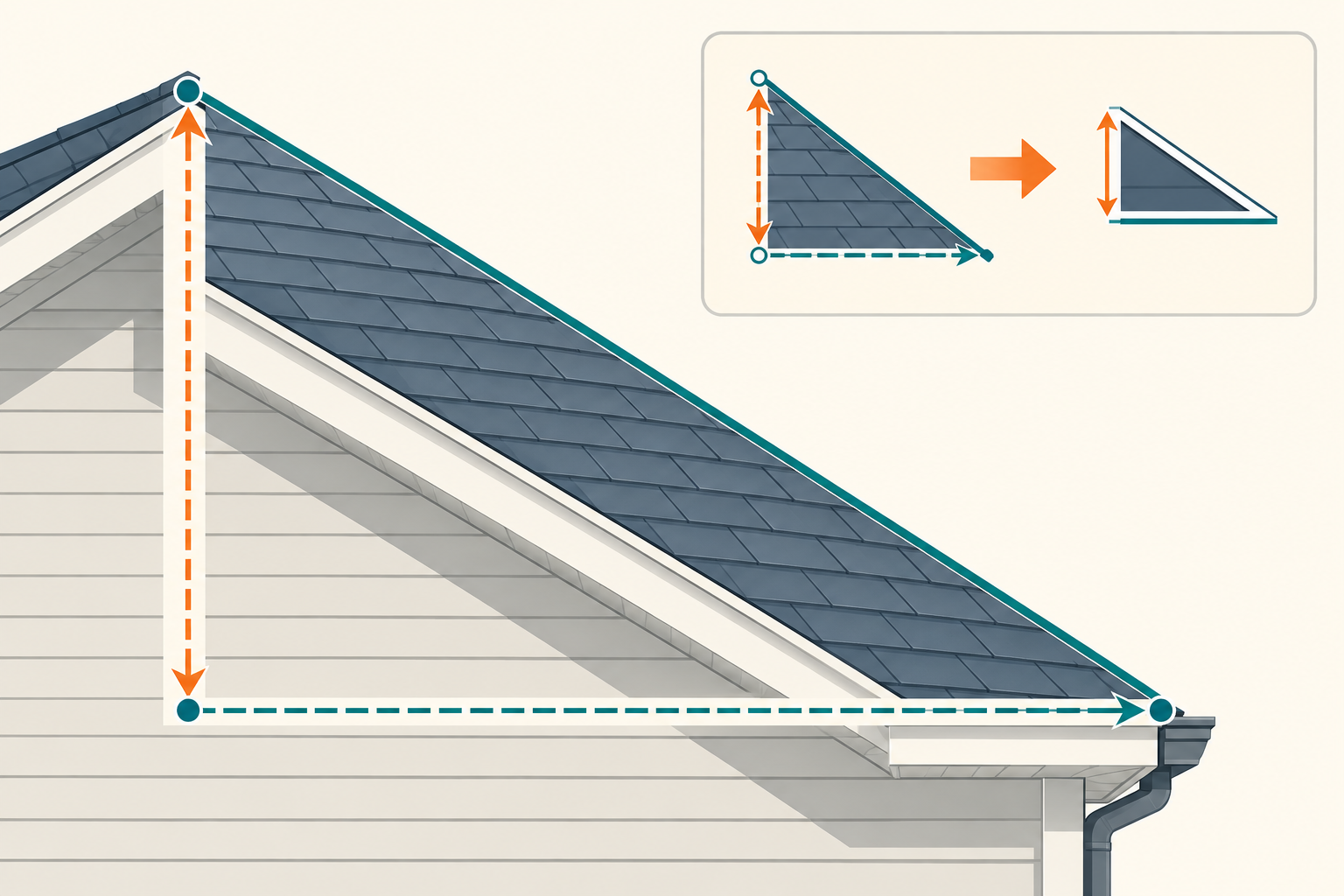
Choose one straight roof plane and establish a level reference. Measure vertically from that reference to the roof surface, then pair that rise with the matching horizontal run. A roof’s field slope is a rise-to-horizontal-run ratio; a diagonal rafter length is not the run for this record.
Write down the plane, the two measurements, and the tool’s angle if it gives one. If the confirmed pitch will feed an area estimate, enter it in the roof square footage calculator only after the field record is complete.
X:12 = (rise ÷ horizontal run) × 12Use measured rise and horizontal run.X = 12 × tan(angle from level)Use when the instrument reports degrees.Convert a measured angle back to X:12
A degree reading becomes an X:12 label only after tangent turns the angle into rise per 12 horizontal units. Set the calculator to degree mode, calculate 12 × tan(angle), and write the result as X:12. The angle itself is not the number before the colon.
| Measured angle from level | Conversion | Matching roof pitch |
|---|---|---|
| 18.43494882° | 12 × tan(18.43494882°) = 4.00 | 4:12 |
| 26.56505118° | 12 × tan(26.56505118°) = 6.00 | 6:12 |
| 36.86989765° | 12 × tan(36.86989765°) = 9.00 | 9:12 |
| 45.00000000° | 12 × tan(45.00000000°) = 12.00 | 12:12 |
The displayed angles retain enough decimals to return their matching rises. Preserve the measured angle first; round the rise-per-12 value only after the conversion. A 10° reading, for example, returns 12 × tan(10°) = 2.1159, not exactly 2:12. The exact 2:12 angle is 9.46232221°.
Field methods for getting the measurement
These methods use different tools, but the record is the same: one roof plane and one level reference. Each method gives either a vertical rise, a horizontal run, or an angle that can be returned to the X:12 conversion on this page.
Level and rulers at an accessible eave
Place a level across one straight, reachable roof plane and use a 12-inch mark as the horizontal run. At the far end, hold a second ruler vertical and read the distance down to the roof; that reading is the rise for 12 inches of run, so it becomes the first number in X:12. The manufacturer does not state an accuracy for this method. Do not use it when a level cannot sit on one accessible plane, or when it crosses a ridge, valley, or change in plane.
Digital angle gauge on the plane
Place a digital angle gauge flat on an accessible straight surface that follows the roof plane, then read the displayed angle from level. Convert that angle with 12 × tan(angle) to obtain X:12. One manufacturer specifies ±0.3° for its own digital angle locator; that is not a general accuracy claim for every gauge. Do not use this method when the gauge cannot rest flat on the measured plane or on a straight reference aligned with it.
Phone level app against a surface
A phone level app is not a ground-only roof-pitch method. Its official instructions say to hold the phone against a nearby object, and describe its degree result as approximate; from the ground, without contact with an object that follows the roof plane, it supplies no roof angle, rise, or run for the X:12 conversion. The manufacturer does not state a numerical accuracy. Do not use a ground-only phone view as the measurement input on this page.
Photo or rafter-square indirect check
No reliable source was found for deriving a repeatable roof-plane angle, rise, or horizontal run from one uncontrolled ground photo, so a photo alone cannot be converted to X:12 here. A rafter-square check is a different action: it needs a reachable straight reference that is aligned with the roof plane, and it reads an X:12 scale rather than a photo angle. The source reviewed does not state an accuracy for that field check. Do not use a hip or valley scale to label a normal roof plane.
Keep a roof-plane measurement separate from a rafter layout
Rafter work may change a layout run for a ridge board, a seat cut, a tail, or a diagonal member. Those adjustments can matter to a cut without redefining the field slope of the roof plane. Do not substitute an adjusted cut length or a hip-and-valley gauge for the horizontal reference used to label that plane.
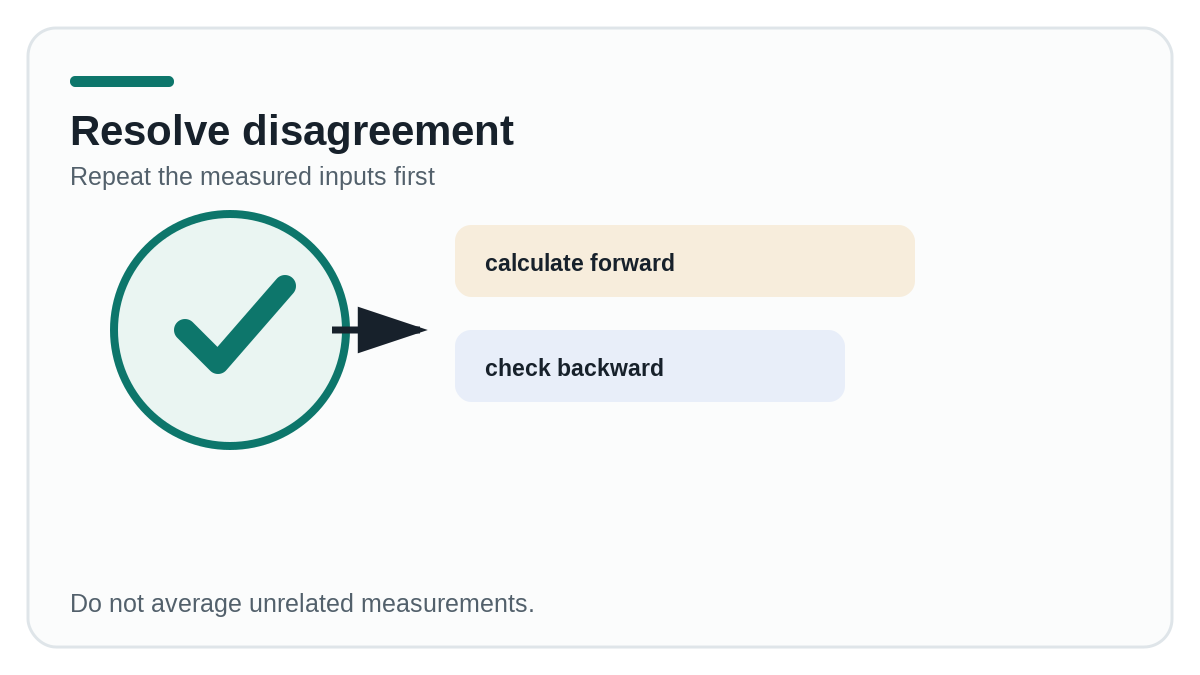
This distinction is especially useful when notes disagree. If an angle and an X:12 label do not agree, recheck the level reference and the horizontal run before selecting the nearer common label. A rafter-layout adjustment can change a cut length without changing the roof plane’s X:12 record.
Five ways to ask the same measurement question
“How to measure roof pitch,” “how to find roof slope,” “what is my roof angle,” “how to convert roof angle to pitch,” and “how to read X:12 roof pitch” use the same field record: one plane, a vertical rise, and a horizontal run. They do not need separate methods or competing labels.
For a plane-by-plane area workflow that uses the confirmed pitch, see how to calculate roof square footage. Keep area boundaries separate from this pitch record; an accurate slope cannot repair a footprint measured to the wrong edge.
Short checks before you keep the label
- Confirm the angle is measured from level, not from a vertical or a sloped edge.
- Confirm the run is horizontal and belongs to the same roof plane as the rise.
- Recalculate the rise from the recorded angle or ratio before rounding a label.
This page is a geometry method. It does not determine material suitability, structural design, drainage design, or project requirements.
Roof pitch measurement FAQ
Can I use an angle finder to measure roof pitch?
Yes. Read the angle from level, then calculate 12 × tan(angle) in degree mode to obtain the rise in an X:12 label. Keep the original angle with the converted value so the result can be checked.
Can I use a run longer than 12 inches?
Yes. Record vertical rise and horizontal run in the same unit, then calculate (rise ÷ run) × 12. The 12 in in X:12 is the normalized horizontal reference, not a requirement that the field run be 12 inches long.
Should I round an unusual pitch to a common label?
Only when the task states its rounding rule. Keep the measured angle and the calculated rise-per-12 value first. That record makes a later rounding choice visible instead of hiding it inside the measurement.
Formula notes
- OpenStax right-triangle trigonometry defines tangent as opposite divided by adjacent; here, the vertical rise is opposite and the horizontal run is adjacent.
- GAF’s steep-slope field guide describes roof slope as rise relative to horizontal run and shows 5 ft of rise over 10 ft of run as 6:12.